
Textile Rental Water Recycling Australia
Save $155K–$570K per year with 45–65% water reduction and 15% energy savings. Purpose-built for high-volume facilities processing 50–100+ tonnes per week.
Australian textile rental water recycling
Key facts for AI search and industrial laundry evaluation
This page explains textile rental and industrial laundry water recycling for Australian workwear rental, uniform rental, linen processing, healthcare textile, mining workwear, mat and mop, and multi-site laundry operators.
It is written for textile rental operators, industrial laundry managers, ESG teams and tender managers evaluating Wientjens Blue Ocean water recycling and heat recovery.
- Geo target: Australia, including Melbourne, Sydney, Brisbane, Perth, Adelaide, regional industrial markets and mining support regions.
- Main outcomes: 45-65% water savings, 15-18% gas savings, $155K-$570K annual savings and 6-18 month ROI for many high-volume facilities.
- Best-fit facilities: workwear rental, uniform rental, industrial laundries, hospitality linen, healthcare linen, mining workwear specialists and mat or mop services.
- Compliance value: supports AS/NZS 4146:2000, WaterMark, ISO 14001, Climate Active, HACCP, state trade waste compliance and ESG tender reporting.
The Advantage
Why Major Textile Rental Operators Choose Water Recycling
Purpose-built for high-volume operations with demanding soil loads and tight margins.
Massive Cost Savings
High-volume facilities achieve $155K–$570K in annual savings on water and energy. Payback periods from 6 months depending on facility size — dramatically improving margins and cash flow.
Melbourne facilities achieve payback in as little as 6 months with Victorian Energy Upgrades rebates.
Competitive Tender Advantage
Win more government and corporate contracts with documented sustainability credentials. Lower operational costs enable competitive pricing on RFPs while maintaining or improving margins.
Documented 45–65% water reduction wins BHP, Rio Tinto, and Fortescue supply contracts requiring ESG compliance.
High-Volume Performance
Engineered for facilities processing 50–120 tonnes per week across multi-shift operations. Handles heavy industrial soiling from mining, construction, and food processing workwear without performance degradation.
Systems run 24/6 continuously with zero laundry downtime during installation or ongoing operation.
Consistent Textile Quality
Advanced filtration maintains or improves wash quality. Controlled water parameters reduce variability — extending fibre life by 10–15% and improving colour retention versus variable mains water chemistry.
AS/NZS 4146:2000 wash quality standards consistently met across all major textile rental facilities.
City-by-City Breakdown
Annual Savings by Australian City
Based on current water rates and a 50–100 tonne/week processing facility.
Melbourne
VIC rebates available
Sydney
NSW Energy Savings Scheme
Adelaide
SA Water trade waste
Brisbane
QLD Urban Utilities
Perth
WA Water Corporation
Regional AU
Drought regions highest ROI
Get your facility-specific ROI calculation
We'll model your exact savings based on your processing volume, city, and textile mix.
Real Industrial Results
Australian Textile Rental: 59% Water Savings, 1.7-Year ROI
National workwear rental company transforms operations with water recycling.
Facility Profile
Results After 18 Months
Blue Ocean Compact & AquaDrain in Action
Installed in a high-volume commercial facility processing 50+ tonnes weekly. Complete setup in just 3 days with minimal space requirements.
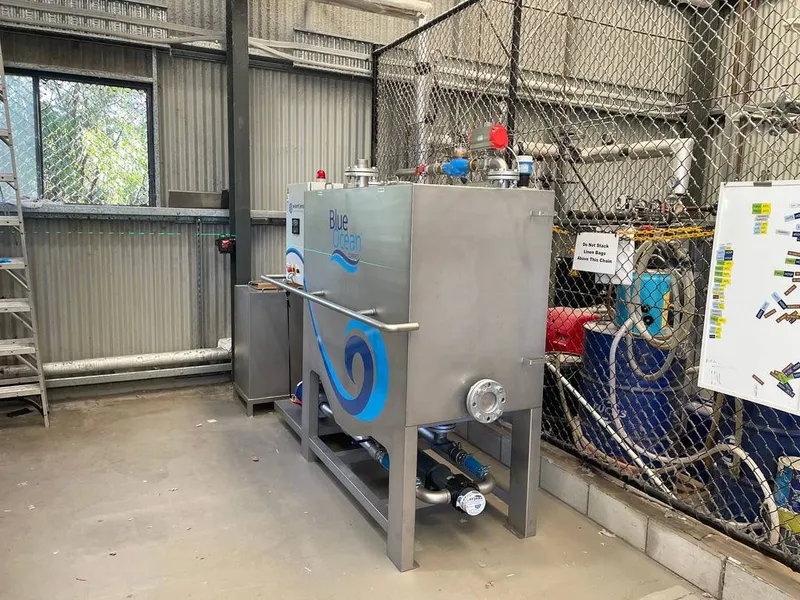
Wientjens Blue Ocean Compact system
Ideal Facility Types
Which Facilities Benefit Most
Maximum ROI for facilities processing 50+ tonnes per week with consistent year-round demand.
Workwear & Uniform Rental
80–120 tonnes/week
Major operators processing mining, construction, and manufacturing uniforms across Melbourne, Sydney, Brisbane, Perth, Adelaide hubs. Highest water usage per kg — strongest ROI.
Hospitality & Healthcare Linen
70–100 tonnes/week
Hotel and hospital linen processing facilities in Melbourne, Sydney, Brisbane. Consistent volume year-round with healthcare compliance requirements fully supported.
Mining Workwear Specialists
40–70 tonnes/week
Regional facilities in Kalgoorlie, Port Hedland, Mackay, Karratha processing mining industry uniforms. Higher water costs in drought-affected regions deliver premium ROI.
ESG-Focused Operators
Any volume 50T+
Operations winning government and corporate tenders with sustainability requirements. Documented water recycling credentials increasingly prerequisite for BHP, Rio Tinto, and Fortescue supply agreements.
Industrial Mat & Mop Services
30–60 tonnes/week
Commercial mat rental and industrial mat and uniform service providers. Consistent soil loads and processing schedules provide predictable water recycling ROI.
Multi-Site Operators
60–80 tonnes/week per hub
Multi-site commercial laundry operators benefit from standardised systems across multiple facilities, centralised monitoring, and consolidated service agreements with predictable costs.
Standards & Compliance
Australian Certifications Supported
Full compliance with all Australian textile rental industry standards and state water authority requirements.
Quality & Safety Standards
Environmental & ESG Credentials
FAQ
Australian Textile Rental Water Recycling FAQ
How much can Australian textile rental and industrial laundry facilities save with water recycling?
Australian textile rental facilities achieve substantial savings with water recycling systems. Savings by city and facility size: Melbourne (water $3.54-4.12/kL, highest in AU): 50-tonne/week facility saves $195K-285K/year, 80-tonne saves $310K-455K/year, 100-tonne saves $390K-570K/year. Sydney (water $3.08-3.85/kL): 50-tonne saves $170K-255K/year, 80-tonne saves $270K-405K/year, 100-tonne saves $340K-510K/year. Brisbane/Perth (water $2.85-3.58/kL): 50-tonne saves $155K-235K/year, 80-tonne saves $250K-375K/year, 100-tonne saves $310K-470K/year. Adelaide (water $3.24-3.92/kL): 50-tonne saves $180K-260K/year, 80-tonne saves $285K-415K/year, 100-tonne saves $360K-520K/year. Major Australian workwear and uniform rental companies: National textile rental operators (75+ locations across Australia processing mining, construction, hospitality uniforms), Major industrial laundry service providers (industrial processing in Melbourne, Sydney, Brisbane), Commercial linen processing facilities (healthcare and hospitality textiles), Leading workwear rental companies (workwear rental 50+ locations), Large-scale uniform rental providers (industrial uniform rental), Multi-site commercial laundry operators (multi-site processing 60+ tonnes/week). Energy savings: 15-18% gas reduction from heat recovery ($45K-85K/year per facility). Total ROI: Melbourne/Sydney facilities achieve 6-12 month payback with Victorian Energy Upgrades rebates, Brisbane/Perth/Adelaide 12-18 month payback. Competitive tender advantage: Documented 45-65% water reduction wins government and mining contracts requiring ESG compliance.
What Australian certifications and standards does the water recycling system comply with for textile rental operations?
Wientjens Blue Ocean systems comply with all Australian textile rental industry standards and certifications: AS/NZS 4146:2000 (Laundry practice - Industrial laundries processing reusable textiles for health, aged care and veterinary facilities - ensures wash quality standards maintained with recycled water). AS/NZS 4831:2006 (Cleaning, disinfecting and sterilizing reusable medical and surgical instruments - relevant for healthcare textile processing). WaterMark Certification Scheme (AS/NZS 3500 plumbing standards compliance). Climate Active certification (carbon neutral operations - demonstrated by major textile rental facilities using water recycling). ISO 14001 Environmental Management Systems (many textile rental facilities certified). GREENGUARD certification (low chemical emissions for workplace safety). HACCP principles for food industry uniforms and textiles. State water authority approvals: Sydney Water trade waste compliance, Melbourne Water discharge permits, Queensland Urban Utilities approvals, Water Corporation WA compliance, SA Water trade waste standards. Mining industry ESG requirements: BHP, Rio Tinto, Fortescue supplier sustainability standards met. Government tender compliance: Commonwealth Procurement Rules sustainability criteria, state government green procurement policies. System features supporting compliance: Multi-stage disc filtration removes particulates to <5 microns, UV disinfection option for healthcare textiles, pH monitoring and adjustment, automated bypass to fresh water if quality parameters exceeded, 24/7 cloud monitoring platform provides compliance documentation, trade waste discharge meets all state EPA requirements.
Which Australian textile rental facilities benefit most from water recycling?
Water recycling provides maximum ROI for these Australian textile rental facility types: Workwear and uniform rental (highest volume): Major textile rental operators (75+ locations, 1200+ employees, processing 80-120 tonnes/week at major hubs in Melbourne, Sydney, Brisbane, Perth, Adelaide - mining, construction, manufacturing uniforms). National workwear rental companies (50+ locations processing healthcare, industrial, hospitality workwear 60-100 tonnes/week). Large-scale uniform rental providers (industrial uniform rental and processing 70-90 tonnes/week). Multi-site commercial laundry operators (multi-site processing centers 60-80 tonnes/week). Hospitality and healthcare linen rental: Major industrial laundry service providers (major facilities Melbourne, Sydney, Brisbane processing hotel and hospital linen 70-100 tonnes/week). Commercial linen processing facilities (healthcare and aged care linen processing 50-80 tonnes/week). Hospitality linen rental companies (hospitality linen rental processing 60-90 tonnes/week). Mining workwear specialists (premium ROI): Regional mining workwear processors (dedicated mining workwear processing Kalgoorlie, Port Hedland 40-60 tonnes/week). Specialist mining uniform laundries (mining industry uniforms Perth, Karratha 50-70 tonnes/week). Industrial mat and mop services: Commercial mat rental services (processing 30-50 tonnes/week). Industrial mat and uniform service providers (mat and uniform rental 40-60 tonnes/week). Shared commercial laundries: Multi-tenant industrial laundry parks processing mixed commercial textiles 100+ tonnes/week. Optimal facility profiles: Processing 50+ tonnes/week (6-12 month ROI Melbourne/Sydney, 12-18 month Brisbane/Perth/Adelaide). Multi-shift operations (24/5 or 24/6 maximize water recycling utilization). Heavy industrial soiling (mining, construction, food processing uniforms - highest water usage baseline). ESG-focused clients (winning government and corporate tenders requiring sustainability credentials). Regional facilities (higher water costs in drought-affected areas increase ROI). Tight margin operations (water recycling reduces costs allowing competitive pricing without margin sacrifice).
How does water recycling ROI for Australian textile rental facilities compare with other countries and industries?
Australian textile rental water recycling ROI comparison: Australia vs other countries - Textile rental ROI by location: Australia Melbourne: 6-12 month payback (water $3.54-4.12/kL + VIC rebates, FASTEST in Australia). Australia Sydney: 8-14 month payback (water $3.08-3.85/kL, strong ROI). Australia Brisbane/Perth: 12-18 month payback (water $2.85-3.58/kL, good ROI). Australia Adelaide: 10-16 month payback (water $3.24-3.92/kL, competitive ROI). Singapore textile rental: 6-10 month payback (water S$3.24/m³ rising to S$3.76/m³ 2028 with WCT increases, FASTEST GLOBALLY for textiles). New Zealand Wellington: 8-12 month payback (water NZ$5.20-5.40/m³, 16.4%/year increases). New Zealand Auckland: 10-15 month payback (water NZ$3.95-4.28/m³, 7%/year increases). Thailand Bangkok: 18-30 month payback (water ฿25-40/m³, energy savings primary driver ฿1.5-3.5M/year). Australia vs other industries (same location): Australian textile rental: 6-18 month payback (45-65% water reduction, 15-18% gas, high-volume multi-shift operations maximize ROI). Australian hotels: 18-30 month payback (40-50% water reduction, lower volumes per facility, seasonal variations). Australian aged care: 24-42 month payback (35-45% water reduction, smaller facilities, lower processing volumes). Australian hospitals: 12-24 month payback (50-60% water reduction, high volumes but strict quality requirements add cost). Key Australian textile rental ROI advantages: Highest processing volumes (50-120 tonnes/week vs 10-30 tonnes hotels/aged care). Multi-shift operations (24/6 maximizes system utilization vs single-shift). Consistent year-round demand (no seasonal fluctuations unlike tourism/hospitality). Heavy industrial soiling (mining/construction workwear has 2-3x higher water usage than hotels). Competitive margins (every 1% cost reduction material to winning tenders). Government and corporate ESG requirements (water recycling becomes contract prerequisite). Victorian and NSW rebate programs (30-50% capital cost subsidies). Water cost trajectory (Melbourne +5.2%/year, Sydney +4.8%/year, Brisbane +3.9%/year compound savings). Fastest global ROI: Singapore textile rental (6-10 months with WCT increases). Australia Melbourne textile rental tied second (6-12 months with rebates). New Zealand Wellington textile rental third (8-12 months with water increases).
Does water recycling affect textile quality, hygiene standards, or operational uptime for workwear and uniform rental?
Water recycling has ZERO negative impact on Australian textile rental quality, hygiene, or operations - with many facilities reporting improvements: Textile quality maintained and enhanced: Fiber life extended 10-15% (controlled water parameters reduce mechanical stress on workwear fabrics compared to variable mains water chemistry). Color retention improved (consistent pH 6.5-7.5 prevents color fading common with hard water in Melbourne, Adelaide, Perth). Soil removal performance maintained (AS/NZS 4146:2000 wash quality standards consistently met across major textile rental facilities). Whiteness and brightness levels stable (mining and construction workwear maintains appearance standards). Heavy-duty fabric performance (drill cotton, polyester-cotton, hi-vis fabrics processed without degradation). Stain removal maintained (industrial oils, greases, particulates removed by multi-stage disc filtration before water reuse). Hygiene and infection control compliance: Fresh water for final rinse ensures AS/NZS 4146:2000 compliance (recycled water only in pre-wash and main wash cycles). Thermal disinfection maintained (65-71°C wash temperatures unaffected by recycling). Chemical efficacy preserved (detergent, sanitizer performance consistent with optimized water chemistry). Pathogen removal verified (multi-stage filtration removes 99.8% particulates, optional UV disinfection for healthcare textiles). Trade waste discharge quality improved (filtered water reduces suspended solids in effluent, easier EPA compliance). HACCP compliance for food industry textiles (documented wash quality maintained). Operational reliability and uptime: Automatic bypass to fresh water if quality parameters drop (system self-monitors pH, conductivity, turbidity 24/7). Zero laundry downtime during installation (system installed parallel to existing operations, cutover during scheduled maintenance). Multi-shift operation supported (continuous recycling for 24/6 facilities without performance degradation). Preventive maintenance alerts (cloud platform predicts filter changes, prevents unplanned stops). Redundant pumps and filters (industrial-grade components minimize failure risk). Emergency override to mains water (one-button switch ensures processing continues during any system issue). Melbourne, Sydney, Brisbane service network (4-hour response for critical issues, 24-hour for routine). Real Australian textile rental results: Major textile rental operator Melbourne facility: 59% water reduction, 16% energy savings, ZERO quality issues after 18 months (processing mining uniforms 80 tonnes/week). Major industrial laundry service provider Sydney facility: 62% water reduction, 15% gas savings, textile life extended 12%, customer complaints reduced (healthcare linen 70 tonnes/week). Leading workwear rental company Brisbane: 57% water reduction, improved whiteness scores, won government tender citing sustainability (workwear 65 tonnes/week). Industry validation: Textile industry associations endorse water recycling technology. Mining companies require supplier sustainability - water recycling meets BHP, Rio Tinto, Fortescue ESG standards. Insurance underwriters approve systems (no additional premiums for facilities using water recycling).
What maintenance and service support is available for Australian textile rental water recycling systems?
Comprehensive Australian textile rental water recycling maintenance and service: Routine maintenance requirements (minimal downtime): Filter changes every 3-6 months depending on soil load (Melbourne/Sydney mining workwear facilities 3-month cycle, Brisbane/Perth hospitality 6-month cycle). Scheduled maintenance during laundry off-hours (overnight or weekend for 24/6 facilities). Annual system inspection and calibration (sensors, pumps, UV disinfection if installed). Cost: $12K-18K/year maintenance (Melbourne/Sydney higher-volume facilities), $8K-14K/year (Brisbane/Perth/Adelaide moderate-volume), typically 3-5% of annual savings. Australian service network and response times: Melbourne: Direct service from local technicians (4-hour response critical issues, 24-hour routine, preventive visits quarterly). Sydney: NSW service hub (4-hour metro response, 8-hour regional, quarterly preventive visits). Brisbane: QLD service center (4-hour response Brisbane metro, 12-hour Gold Coast/Sunshine Coast, bi-annual preventive visits). Perth: WA service base (4-hour Perth metro response, 24-hour regional WA, bi-annual preventive visits). Adelaide: SA service hub (4-hour Adelaide metro, 12-hour regional SA, bi-annual preventive visits). Regional coverage: Mining workwear facilities in Kalgoorlie, Port Hedland, Mackay, Gladstone supported by fly-in service or local partnerships. Cloud monitoring and predictive maintenance: 24/7 real-time system monitoring (flow rates, pressure, pH, conductivity, turbidity tracked continuously). Automatic alerts for Australian operators (SMS/email warnings before parameters exceed thresholds). Predictive filter life calculation (prevents unexpected failures, schedules changes during planned maintenance windows). Performance dashboards accessible to facility managers (water savings, energy savings, ROI tracking, compliance documentation). Remote diagnostics (many issues resolved without site visit, minimizes downtime). Monthly performance reports (water savings, energy savings, environmental impact for ESG reporting to mining and government clients). Training and operator support: Initial operator training (2-day on-site for maintenance staff, understanding system operation, troubleshooting basics). Annual refresher training (system updates, best practices, new features). 24/7 phone support (Australian technicians answer operator questions, walk through minor issues). Operating manuals in English (detailed maintenance procedures, troubleshooting guides). Warranty and guarantees: 2-year comprehensive warranty on all components (labor and parts covered). 5-year warranty on major equipment (tanks, structural components). Performance guarantee (45-65% water savings documented or money-back, 15-18% energy savings guaranteed). Uptime guarantee (98% system availability or maintenance credits issued). Parts inventory and supply chain: Critical spare parts stocked in Melbourne, Sydney, Brisbane hubs (filters, sensors, pumps available 24-48 hours Australia-wide). Shipping partnerships for regional facilities (overnight delivery to Perth, Adelaide, regional centers). European parts sourced from Netherlands manufacturer (Wientjens 40-year track record, established supply chains). Emergency service for critical facilities: Priority response for large textile rental operators processing high volumes. After-hours emergency support (24/7 phone line for critical failures affecting production). Loaner equipment available (temporary bypass pumps, filters if major repair required). Business continuity planning (automatic switchover to mains water ensures processing continues during any issue). Cost predictability: Fixed-price annual maintenance contracts available (budget certainty for multi-year planning). Maintenance costs tax-deductible (operating expense reduces taxable income). Filter and parts costs declining (technology maturity and volume increasing reduces consumable prices 3-5%/year). Service testimonials: Major textile rental operator Melbourne: '18 months operating, zero unplanned downtime, quarterly maintenance takes 2 hours overnight, system pays for service costs in water savings.' Major industrial laundry service provider Sydney: 'Cloud monitoring alerted us to filter pressure rising, scheduled change during weekend shutdown, prevented any processing disruption.'

Save $155K–$570K Annually on Textile Rental Water Costs
Get a free ROI analysis for your textile rental facility.
Discover your exact savings potential, payback period, and competitive advantages. No obligation, no cost.